
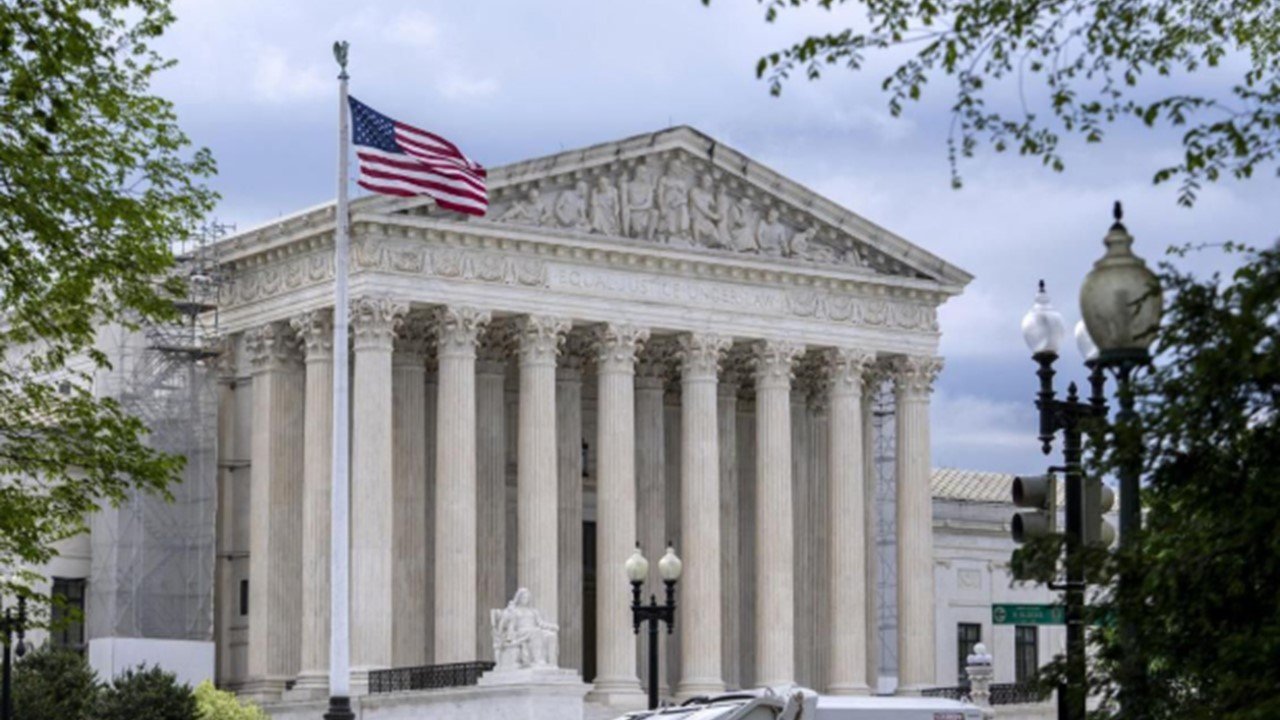
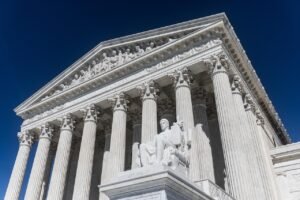
The recent decision by the U.S. Supreme Court regarding birthright citizenship has sparked significant debate and analysis across various sectors. This ruling, which limits the power of federal judges to issue nationwide injunctions, has profound implications for immigration policy and the interpretation of constitutional rights in the United States. This article delves into the details of the ruling, its historical context, and its potential impact on future legal and political landscapes.
Background of the Case
The Supreme Court’s ruling stems from President Donald Trump’s executive order aimed at redefining birthright citizenship. This order sought to deny automatic citizenship to children born in the U.S. to parents who are undocumented immigrants or on temporary visas. The legal challenges to this order were swift, with multiple federal district courts issuing nationwide injunctions to block its implementation. These injunctions were based on the argument that the executive order violated the 14th Amendment, which guarantees citizenship to all persons born or naturalized in the United States.
The Role of Nationwide Injunctions
Nationwide injunctions have become a contentious issue in recent years, particularly as they have been used to halt executive actions from both Republican and Democratic administrations. Critics argue that these injunctions allow a single judge to impose their will on the entire country, undermining the authority of the executive branch. Proponents, however, contend that such injunctions are necessary to prevent chaos and protect the rights of individuals who may be affected by potentially unlawful policies.
The Supreme Court’s Decision
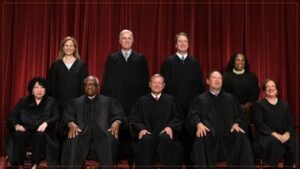
In a 6-3 ruling, the Supreme Court sided with the Trump administration, stating that federal courts likely do not have the authority to issue universal injunctions that block executive actions across the nation. Justice Amy Coney Barrett, writing for the majority, emphasized that federal courts should not exceed their power when addressing executive actions. The ruling allows the Trump administration to partially enforce its birthright citizenship order while legal challenges continue, but it does not address the constitutionality of the order itself.
Key Points from the Ruling
- Limitation on Federal Judges: The Court’s decision restricts federal judges from issuing broad injunctions that affect individuals not directly involved in a lawsuit.
- 30-Day Delay: The ruling stipulates that the executive order cannot take effect for 30 days, providing time for further legal challenges.
- No Ruling on Constitutionality: Importantly, the Court did not rule on whether the executive order itself is constitutional, leaving that question open for future litigation.
Historical Context of Birthright Citizenship
The principle of birthright citizenship is rooted in the 14th Amendment, ratified in 1868, which was designed to ensure that all individuals born in the U.S. are granted citizenship, regardless of their parents’ immigration status. This amendment was enacted in the aftermath of the Civil War to counteract the Supreme Court’s Dred Scott decision, which denied citizenship to African Americans.
Previous Supreme Court Rulings
The Supreme Court has historically upheld the notion of birthright citizenship. In the landmark case of United States v. Wong Kim Ark (1898), the Court affirmed that children born in the U.S. to foreign parents are citizens. This precedent has remained largely unchallenged until recent years, as immigration policy has become a focal point of political discourse.
Implications of the Ruling
The Supreme Court’s decision has far-reaching implications for immigration policy and the interpretation of constitutional rights. By limiting the power of federal judges to issue nationwide injunctions, the ruling could pave the way for more aggressive executive actions on immigration and other contentious issues.
Potential for Increased Executive Power
The ruling may embolden future administrations to pursue policies that could be challenged in court, knowing that the scope of judicial intervention is now limited. This could lead to a patchwork of citizenship rights across different states, depending on local judicial rulings and the willingness of federal judges to issue injunctions.
Impact on Immigrant Communities
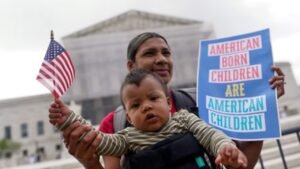
For immigrant communities, the ruling introduces uncertainty regarding citizenship rights for children born to undocumented parents. The potential for varying interpretations of citizenship across states could lead to confusion and fear among families, particularly those with mixed immigration statuses.
Reactions to the Ruling
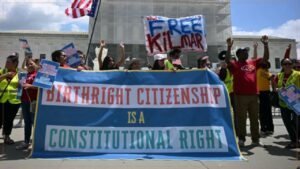
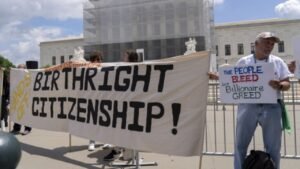
The ruling has elicited a range of responses from various stakeholders, including legal experts, immigrant rights advocates, and political leaders. Many advocates for immigrant rights have expressed concern that the decision undermines fundamental constitutional protections and sets a dangerous precedent for future executive actions.
Support from the Trump Administration
The Trump administration hailed the ruling as a victory for its immigration agenda. Attorney General Pam Bondi stated that the decision would help restore the balance of power between the executive and judicial branches, allowing the administration to implement its policies without undue interference from the courts.
Dissenting Opinions
The dissenting justices, including Justice Sonia Sotomayor, criticized the majority’s decision as a “travesty for the rule of law.” They argued that the ruling effectively allows the executive branch to act unlawfully without accountability, undermining the judiciary’s role in protecting constitutional rights.
Future Legal Challenges
As the legal landscape evolves following this ruling, it is likely that further challenges to the birthright citizenship order will emerge. Legal experts anticipate that cases will be brought forth in various jurisdictions, potentially leading to conflicting rulings that could ultimately require the Supreme Court to address the constitutionality of the executive order.
Class Action Lawsuits
One avenue for challenging the executive order may involve class action lawsuits, which could allow broader relief for affected individuals. The Court’s ruling suggests that while universal injunctions may be limited, courts can still grant relief to groups of plaintiffs who can demonstrate standing.
Conclusion
The Supreme Court’s ruling on birthright citizenship represents a significant moment in the ongoing debate over immigration policy and constitutional rights in the United States. By limiting the power of federal judges to issue nationwide injunctions, the Court has opened the door for more aggressive executive actions while leaving critical questions about citizenship rights unresolved. As the legal battles continue, the implications of this ruling will undoubtedly shape the future of immigration policy and the interpretation of the 14th Amendment for years to come.
In summary, the ruling not only affects the immediate landscape of immigration law but also sets a precedent for how executive power is checked by the judiciary. The evolving nature of this legal discourse will require close attention from all stakeholders involved in the protection of civil rights and the interpretation of constitutional guarantees.